Reopening Dormant Sites: Safety and Equipment Checks Before Spring Work Resumes

As winter fades, commercial construction sites across the Greater Chicagoland area begin to stir. Many of these projects were paused or halted after certain phases were complete due to winter weather, permit delays, or scheduling. But restarting work isn’t as simple as unlocking the gate and bringing in crews. Dormant sites present specific safety risks, equipment issues, and compliance concerns—especially in densely regulated commercial zones. A thorough reactivation plan is essential to protect workers, avoid violations, and maintain progress.
At the center of any safe site restart is the proper use of construction fence and related safety barriers. These are not just physical boundaries—they’re often the first thing inspectors and passersby see, and a key part of maintaining code compliance.
Dormant Sites Carry Hidden Hazards
Sites left idle during winter often experience damage, decay, or vandalism. Snow, ice, and freeze-thaw cycles can shift ground levels, displace fencing, and undermine foundations. Water infiltration may have affected electrical or plumbing installations. Temporary walkways or barriers may have collapsed or blown over.
For commercial construction projects—whether mid-rise residential, office, or retail—these conditions create a high-risk environment. Subsurface issues, untested equipment, and weakened structures can all cause accidents if not addressed before work resumes.
Contractors should walk the entire site with a detailed checklist before restarting. Areas to examine include:
- Integrity of scaffolding and temporary structures
- Functionality of site lighting and electrical systems
- Stability and placement of the construction fence
- Condition of signage and access control points
- Standing water, erosion, or soil displacement
Any hazards identified during this inspection must be addressed before workers reenter the site. Documenting these checks also shows due diligence and may be required for insurance or regulatory compliance.
Construction Fence: The First Step in Spring Site Control
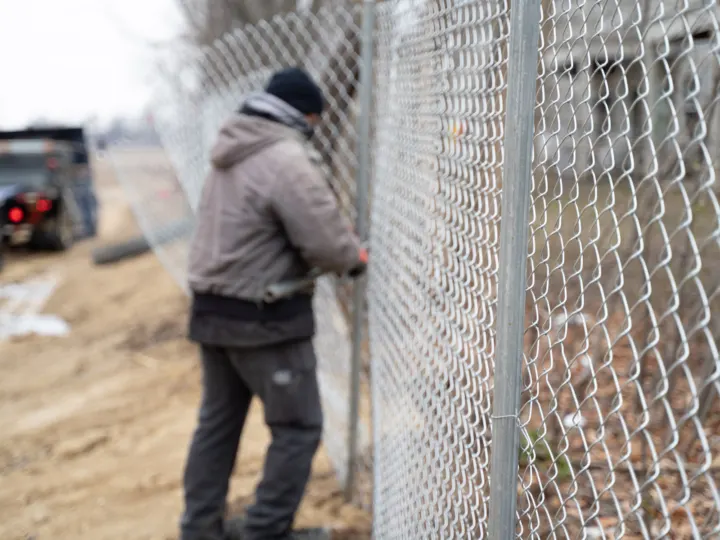
Spring wind and weather can be hard on temporary fencing. If the construction fence has shifted, blown over, or been removed during winter, it must be reinstalled before crews arrive. In many Chicagoland municipalities, the absence of a secure perimeter is grounds for a stop-work order, especially on commercial sites near pedestrian areas or public streets.
Even if the project is mostly enclosed, exterior fencing is still required. It protects passersby, marks property boundaries, and serves as a mounting point for necessary safety and compliance signs. On large commercial lots, fencing also guides delivery vehicles and subcontractors, reducing confusion and traffic flow issues.
Contractors should ensure that construction fence panels are stable, interlocked, and well-anchored. Gates and access points must be clearly marked and operable. In high-wind zones, using ballast blocks or ground stakes can prevent blow-downs, which are both a hazard and a liability risk.
Rechecking Equipment and Temporary Systems
Stored equipment may not function properly after sitting unused through winter. Fuel may have degraded, hydraulic systems could be compromised, and batteries may have failed. Before restarting any machinery, crews should perform full inspections, run diagnostics, and check for leaks or corrosion.
This is especially important on commercial construction sites using cranes, lifts, or excavators. Malfunctions in this equipment don’t just cause delays—they can create severe safety incidents. Local inspectors may also request proof of current maintenance and safety checks.
Temporary systems like power generators, water pumps, and lighting rigs must also be tested. And if any were rented, the rental provider should be contacted to verify maintenance logs or perform onsite servicing.
Communicating Changes With Subcontractors
Another often-overlooked step is updating subcontractors on the current state of the site. Conditions may have changed significantly since winter. Access points could be different. Safety routes might be altered. Even signage and fencing configurations could be new.
Before full crews return, general contractors should conduct a prestart meeting or walkthrough, especially on large commercial projects involving multiple trades. Clear communication prevents confusion and accidents during those first few days back on site.
Check Local Compliance Rules Before Restart
Spring is also when code enforcement activity spikes. Chicago and surrounding cities like Joliet, Aurora, and Elgin increase inspections as construction season resumes. Restarting a site without notifying the appropriate department, or doing so with missing elements like an incomplete fence or outdated signage, can result in penalties.
Some jurisdictions require advance notice before work resumes after a prolonged pause. Others may expect updated erosion control documentation, particularly if sediment has moved or fencing was removed over winter.
Staying ahead of these requirements can save valuable time. Partnering with reliable vendors for construction fence, rental equipment, and safety services also makes reactivation smoother.
Treat Spring Starts Like New Mobilizations
The key takeaway: reopening a dormant commercial construction site is not a minor task. It should be treated like a new mobilization. Safety, security, and compliance all need to be verified before operations restart. And in the eyes of local inspectors and the public, the presence of a well-maintained construction fence is a visible indicator that the site is under control.
Starting fresh—with safety protocols updated and systems fully checked—sets the tone for a productive and compliant spring building season.
As you prepare to re-open or take on the next phase of your building projects you can rely on United Rent-A-Fence to provide complete temporary fence and silt fence installation and temporary rental fence repairs if needed. Please contact us today to request a quote.