
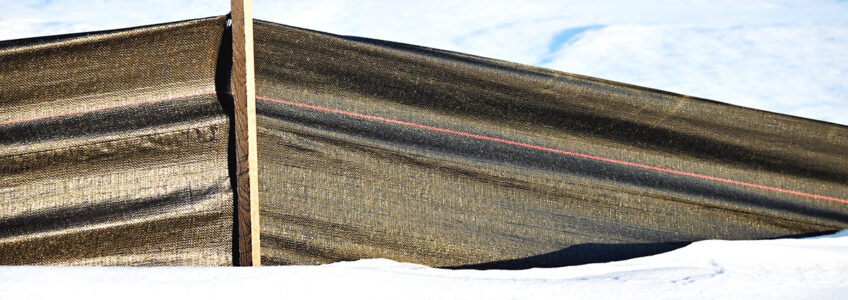
Every contractor in Chicagoland has installed a silt fence. Not every contractor has installed it correctly — and the difference shows up on inspection day.
Silt fence is one of those items that gets treated like a formality. It goes in because the permit requires it, gets stapled to a set of stakes by whoever’s available, and then sits there looking like erosion control while quietly failing to do the job. A fence installed up-slope of a drainage swale, buried only two inches instead of six, with gaps at the ends that funnel sediment directly into the adjacent storm drain — that fence isn’t controlling anything. It’s creating a false sense of compliance.
This article is a practical field guide: where silt fence works, where it doesn’t, how to install it correctly, how Chicagoland’s specific soil and weather conditions affect performance, and what inspectors are actually looking for when they walk your site. For a broader context on why erosion control matters at the regulatory level, Spring Site Prep in Chicagoland: Managing Mud, Runoff, and Sediment Control is a strong starting point. This article is for after you’ve decided to do it right.
What Silt Fence Actually Does — and Doesn’t Do
Let’s clear something up first, because many installation failures stem from misunderstandings about the product’s function.
A silt fence is a sediment trap, not a water barrier. Its job is to slow sheet flow runoff enough that soil particles drop out of suspension before the water passes through the geotextile fabric. It is not designed to handle concentrated flow — drainage channels, construction entrances, or any point where water is moving with velocity rather than spreading across open ground.
Deploying a silt fence in a concentrated flow path is one of the most common failures on Chicagoland sites. When a heavy summer storm sends water down a slope through a defined channel and hits a silt fence, the fence doesn’t filter it — the water backs up behind the fabric until the pressure overwhelms the stakes, and the entire run collapses. You’re left with a pile of dirty orange fabric, a sediment deposit on the wrong side of the line, and a failed inspection.
Use a silt fence for sheet flow on disturbed slopes. For concentrated flow, you need inlet protection, sediment logs, rock check dams, or diversion berms — often in combination. Water Drainage and Sediment Control: Best Practices Using Silt Fences and Sediment Control Logs covers that complementary toolkit in detail.
Placement: Reading the Site Before You Order
Correct silt fence placement starts with reading topography — not just following a site plan drawn by someone who’s never set foot on the job. Here’s what to look for on a site walk:
Run along contour lines, not up and down slopes. Silt fence should always be installed roughly parallel to the land’s contour, perpendicular to the direction of water flow. Fence running up a slope does nothing to intercept sediment-laden runoff; it acts as a funnel.
Identify critical protection points first. Work backward from where sediment cannot go: storm drain inlets, streams, drainage ditches, adjacent properties, and public right-of-way. Place your silt fence between the disturbed area and those points, not wherever it’s convenient to drive a stake.
Leave an adequate buffer between the fence and the slope toe. Silt fence needs space behind it for sediment to accumulate without immediately blocking the fabric. A fence placed six inches from the bottom of a slope fills up after one moderate storm. Standard practice calls for a minimum of several feet of flat buffer — more on long, steep runs.
Anchor the ends. A silt fence run that terminates in open ground at both ends will have runoff going around it within the first rain event. Ends must be tied into existing topography — a berm, curb, tree line, or existing structure — or turned uphill to close off the bypass path.
Installation: The Three Details Inspectors Check Every Time
There are three installation specifics that Illinois EPA and local municipal inspectors in the Chicago region consistently cite in violation notices. Know these before your crew picks up a shovel:
- Trench depth and fabric burial. The bottom of the silt fence fabric must be buried in a trench — minimum 6 inches deep — with the buried flap folded toward the upslope side, then backfilled and compacted. This is the step most frequently skipped in favor of simply toe-pinning fabric to the surface with stakes. An unburied silt fence can be undercut by the first half-inch of rainfall. Inspectors probe the fabric base. Don’t skip the trench.
- Stake spacing and embedment. Stakes should be driven a minimum of 18–24 inches into the ground and spaced no more than 6–10 feet apart on standard slopes, with tighter spacing as the grade increases. On slopes steeper than 2:1, use reinforced silt fence with wire backing — the added support prevents the fabric from billowing outward and failing at the attachment points under hydraulic pressure.
- Fabric tension and splice overlap. Loose, baggy fabric defeats the purpose of the fence entirely. The geotextile should be pulled taut against the stakes and fastened at consistent intervals. Where separate sections join, provide a minimum 18-inch overlap in the direction of flow — not a butt joint, which opens up within one wet cycle.
What Changes in Chicagoland
Most silt fence guidance is written for generic conditions. Here’s what’s materially different about the Chicago metro:
Heavy clay soils. Much of the Chicagoland region — especially DuPage, Cook, Will, and Lake counties — is underlain by glacially deposited heavy clay. Clay soils generate slow infiltration rates and prolonged sheet flow after rain events. Silt fence on clay-heavy sites fills up faster, requires more frequent sediment removal, and stays saturated longer, weakening stake-to-fabric connections over time. Budget for more maintenance visits on clay-dominant sites than a standard spec would suggest.
Freeze-thaw cycling. Chicagoland winters are punishing on silt fence in ways that warmer climates never experience. As Preventing Site Erosion in Winter with Silt Fencing and Sediment Control Solutions covers, repeated freeze-thaw cycles heave stakes upward, pull the buried fabric toe out of the trench, and open gaps at the base of the fence — often without obvious visible damage at the top. Any fence installed before a hard freeze must be fully re-inspected and re-trenched as needed after the first major thaw, which typically arrives in late February or early March in the collar counties.
The spring melt window. The two to four weeks after ground thaw are the highest-risk period for erosion on any active Chicagoland construction site. Saturated, recently frozen soil generates heavy sheet runoff even from light rain events because the ground can’t absorb moisture quickly enough. Sites that looked stable all January can lose significant topsoil in the first warm week of March. A silt fence that isn’t fully operational and hasn’t been recently inspected by late February is a liability event waiting to happen. Protecting Midwest Properties: The Role of Silt Fences in Winter Erosion Management is worth reviewing as part of any end-of-winter site prep routine.
Maintenance: What “Inspect Regularly” Actually Means in Practice
Every erosion control specification requires inspecting silt fence “regularly.” Here is what that means in operational terms on a Chicagoland site:
After every meaningful rain event — anything over roughly a half inch — walk the full fence line. Look for: undercutting at the base, sediment accumulation approaching half the fabric height, tears or holes, leaning or dislodged stakes, and end bypass. A quick 15-minute walk after a storm is far cheaper than a repair call after an inspector finds the problem first.
Remove sediment before it reaches half the fence height. When sediment accumulates to 50% of the fabric height, the fence has lost sufficient hydraulic capacity to function. Sediment removal is a normal, budgeted maintenance activity — not a sign that something has failed. Factor it into the project schedule on any job running through a spring or summer rainy season.
Repair damage within 24 hours. A tire track that crushes a 10-foot section of silt fence, or a delivery truck that clips a stake and pulls the fabric loose — these are not minor cosmetic issues. That opening becomes the path of least resistance for the next storm event. Prompt repair is a compliance requirement under Illinois NPDES Construction Site Stormwater Permit rules, and documented response time matters if a violation notice is issued.
What Inspectors Are Looking For
Illinois EPA and local municipal stormwater inspectors on Chicagoland sites operate under NPDES Construction Site Stormwater Permit requirements. The inspection findings that most commonly generate formal violations:
- Fence installed after site grading has already begun — it must go in before disturbance.
- No trench burial of the fabric toe
- Sediment buildup above 50% of fence height with no evidence of maintenance
- Missing end anchors or open-ended runs that allow bypass
- Fence is placed in concentrated flow paths where it has already failed or been blown out
- No written inspection and maintenance log
That last item catches contractors off guard more than any other. Keeping a simple written record — date, who walked the fence, what was observed, what was corrected — is the fastest way to demonstrate good-faith compliance if a violation notice arrives. A fence that was actually maintained but has no documentation is treated the same as one that wasn’t.
Silt fence is one of the most cost-effective erosion control tools available — when it’s installed correctly and maintained through the life of the project. United Rent-A-Fence supplies and installs silt fence throughout Chicagoland, and our crews understand what local inspectors expect. To discuss silt fence or a full erosion control plan for your next project, request a service call or call us at (630) 543-7990.