
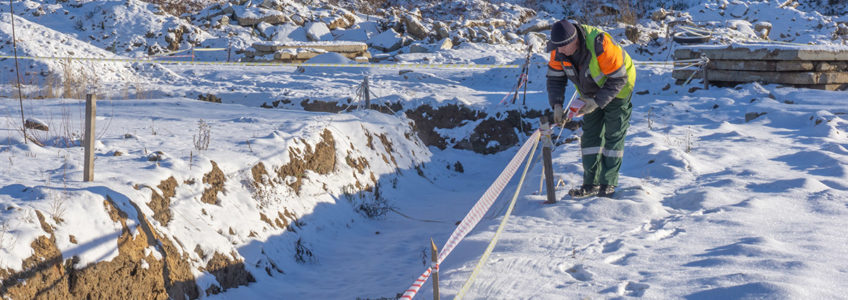
If you build through winter in Chicagoland, you already know the fence line takes a beating. Between freeze-thaw cycles, drifting snow, hard wind, and constant pressure from deliveries and equipment traffic, a temporary fence that worked fine in October can turn into a liability by January if it was not planned for winter conditions. That is why winter fencing is not just about getting something up around the site. It is about choosing the right system, installing it correctly for the season, and maintaining it so the perimeter keeps doing its job when the weather gets ugly. For contractors, supers, and property managers, the goal is simple: keep the site secure, keep pedestrians out of harm’s way, and avoid mid-winter service calls that could have been prevented with better planning on day one.
Why winter changes everything
Cold-weather jobsites create a different set of problems than the same project would face in spring or summer. Frozen ground affects installation, snow cover hides hazards and fence lines, and strong winter winds put extra stress on temporary fence systems, especially panel fencing with screens attached. United Rent-A-Fence’s winter installation guidance is clear: a temporary fence can absolutely be installed during winter, but the conditions may require adjustments to how the work is done. That includes snow clearing for access and visibility, alternate installation methods for certain products, and extra stabilization when wind loads increase.
This is also where winter perimeter planning becomes more than a security issue. A fence that leans, shifts, or gets buried in a snow pile can create safety concerns for workers, pedestrians, and passing vehicles just as quickly as it can create security gaps.
Start with the right fence for the site.
Not every winter jobsite needs the same perimeter solution. The right choice depends on project duration, ground conditions, site layout, and how much security the site actually needs.
For long-term construction sites, post-driven chain link is usually the preferred winter option because the posts are embedded in the ground, providing a more stable, secure barrier over time. United Rent-A-Fence’s guide to post-driven versus panel fencing notes that post-driven fence offers stronger stability, better security, and better performance on uneven terrain, all of which matter more once winter weather shows up.
For shorter-term projects or sites on asphalt and concrete, panel fence still has real advantages because it installs quickly and can be reconfigured as the job changes. The tradeoff is that panel fence is more dependent on bases, braces, and ballast, and it needs closer attention during the winter when wind and snow loads start working against it.
A natural internal link here would be to The Essential Guide to Choosing Between Post-Driven and Panel Fencing for Your Project for readers who need help deciding which system fits their site best.
Clear the path before installation.
One of the most practical winter fence lessons is also one of the easiest to overlook: installers need access to the ground, not the snow on top. United Rent-A-Fence’s winter installation article states that a 4-foot-wide path of snow should be cleared so crews can maneuver equipment and verify target depth during installation.
That is important for a few reasons. First, it helps the installation crew set the fence where it is supposed to go instead of guessing under snow cover; second, it reduces the chances of a weak or uneven setup that only becomes obvious when the snow melts; and third, it speeds up the work because the crew is not fighting site conditions that could have been prepared in advance.
This is a good spot to internally link to Installing Temporary Fences in Winter or Preparing for Temporary Fence Installation: Key Steps for a Smooth Setup if the article is being optimized to support related planning content on the blog.
Watch wind loads, especially with panel fence
Winter wind is one of the biggest reasons temporary fence fails when the weather gets rough. Panel fencing is especially vulnerable because it is freestanding, and any added windscreen increases the force pushing against the fence line.
United Rent-A-Fence specifically notes that winter winds can apply additional pressure to windscreen-clad panel fences, which is why extra sandbags may be needed on panel fence bases during colder months. That is a great reminder for contractors who want privacy or a cleaner street-facing appearance: the screen may help with visibility and branding, but it also changes the physics of the fence in winter weather.
That does not mean windscreen should never be used. It just means the perimeter should be designed for the added load instead of treating the screen like a cosmetic add-on that has no effect on stability.
Plan for snow storage and equipment movement
Many fence problems are not caused solely by weather. They are caused by weather plus bad site logistics. If snow has nowhere to go, crews will pile it against the perimeter. If the site is too tight, operators will start clipping corners, leaning materials on the fence, or creating shortcuts at the weakest point in the layout.
That is why winter-proofing your perimeter has to include a real plan for snow storage, haul routes, gate locations, and delivery access. Before the fence goes in, it helps to identify where plows will push snow, where trucks will stage, and where equipment will turn so the perimeter does not end up fighting the way the site actually operates.
This same principle shows up in the site’s article on protecting green spaces during construction, where clearly marked boundaries help workers and operators avoid protected zones. The perimeter fence serves a similar purpose in winter: it does not just block access, it organizes the site.
Do not ignore freeze-thaw and ground movement
Winter is not one long frozen condition. Chicagoland jobsites deal with repeated freeze-thaw cycles, and that movement can affect soil conditions, base stability, and the way water and slush collect around the fence line. That matters most on sites with soft ground, disturbed soil, or mixed surface conditions. A fence that looks fine during a hard freeze can become unstable after a thaw, especially if runoff starts washing out areas near the perimeter or if bases settle unevenly in mud and slush.
This is one reason winter fencing and winter erosion control should not be treated as separate conversations. If the perimeter runs near disturbed grades or drainage paths, it makes sense to coordinate temporary fence with silt fence and sediment-control measures so the edge of the site stays protected as conditions change.
Inspect more often in winter
A winter fence is not something to install and forget. Snow events, high winds, plowing, and thaw conditions all give you reasons to inspect the perimeter more often than during mild weather.
At a minimum, crews should keep an eye on:
- Leaning panels or loose clamps.
- Shifted bases or missing sandbags.
- Snow piles pressing against the fence line.
- Gate areas that become hard to open or close after icing.
- Low spots where meltwater is undermining the perimeter.
These checks do not need to be complicated. But catching a small issue after a storm is a lot easier than dealing with a downed section of fence after it has already created a safety or security problem.
The payoff of getting it right
A well-planned winter perimeter does more than check a box for site security. It protects workers, keeps pedestrians away from hazards, supports cleaner site organization, and helps the project keep moving even when winter conditions are slowing everything else.
It also saves money in the less obvious ways. Better fence selection, better winter prep, and better maintenance can reduce avoidable repairs, prevent emergency adjustments, and cut down on delays caused by a perimeter that no longer matches site conditions.
In a market like Chicagoland, that matters. Winter is hard enough on a schedule without the fence becoming part of the problem.
The time to act is now
If your project is heading into winter or already dealing with snow, wind, and frozen ground, now is the time to take a hard look at your perimeter. United Rent-A-Fence provides temporary fence, orange fence, and erosion-control solutions throughout the Chicagoland market, and the right setup can help your site stay secure, organized, and safer through the toughest months of the year. Contact United Rent-A-Fence for a quote and make sure your winter fence plan is built for real Midwest conditions, not just mild-weather assumptions.